Hot Dip Galvanizing Equipment FAQ: What Buyers Ask After the Technical Review
Once the drawings are approved, the conversation moves to money and throughput. These are the questions Xinlingyu customers raise at that stage, answered from the performance data of a delivered 20,000 ton per year line.
Q1. What drives the price of a galvanizing plant?
Five variables, in order of impact: kettle size, target annual tonnage, heating fuel, level of automation, and the scope of environmental equipment. A line specified for furnace oil with a closed fume room and zinc smoke treatment costs materially more than an open line, but it is also the difference between operating legally in the EU and not. Standard commercial terms: minimum order one set, price by negotiation, payment against L/C, D/A, D/P or T/T, delivery in 90 days.
Q2. What throughput can a 7 m line realistically reach?
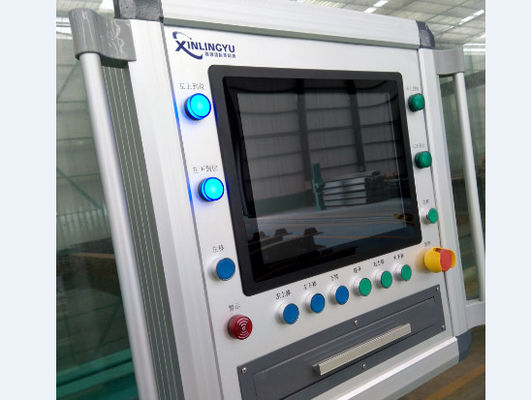
20,000 tons per year on a ring layout with six hoists. The constraint is rarely the kettle — it is the crane cycle and the pickling dwell time. Two hoists run as a synchronized group under remote control, each hoist individually operable, so the crane can overlap dips without waiting for a fully loaded jig.
Q3. Where does the operating cost actually go?
Zinc first, fuel second, labor third, and environmental consumables a distant fourth — provided the flux is managed properly. Online flux regeneration at up to 4 m³/h keeps iron ions below 2 g/l with pH held at 3.0–4.5, so iron is removed from the flux rather than dragged into the zinc as dross. That single control is the largest hidden saving in the plant.
| Operating Item | Reference Figure |
|---|
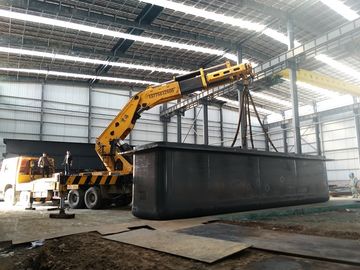
| Zinc in kettle | ~110 tons (7.0 × 1.2 × 2.2 m, 60 mm wall) |
| Fuel consumption | 30 kg/hour, 2 × 450 kW burners |
| Connected electrical load | 230 kW maximum |
| Water consumption | 0.01 m³ per ton of product |
| Compressed air | 3 m³/min at 0.5 MPa |
Q4. How much can I cut fuel and power bills?
Roughly 10% of fuel from combustion-air preheating alone, plus the elimination of a separate flux heating circuit because flue waste heat holds the flux at 60–70 °C through a titanium-tube exchanger. On the electrical side, frequency-controlled exhaust fans track furnace pressure instead of running flat out, and the pulse heating strategy avoids the long high-fire periods that dominate consumption on conventional furnaces.
Q5. How many people does the line need?
Loading and unloading are the labor-intensive ends; the dip cycle itself is automated. A crew of four to six per shift handles classification, jigging, trimming and packing on a 20,000 ton line, with one operator supervising the ring crane. Training is included, and the control system's real-time monitoring and fault diagnosis shortens the learning curve considerably.
Q6. How long does the kettle last, and what kills it early?
Kettle life is set by temperature discipline. Held at 435–450 °C with ±2 °C tolerance and a furnace that never exceeds 650 °C, wall erosion stays predictable. Leaks almost always trace back to local overheating or mechanical damage from the crane. A support pan to control deformation, a zinc leakage alarm and a collection pit are cheap insurance against a six-figure failure.
Q7. What happens to waste acid and wastewater?
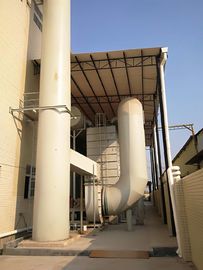
An acid waste neutralization system treats spent acid and returns neutralized water to production. The process is designed without a water-washing stage, which cuts both investment and daily operating cost. Combined with the two-stage acid fume scrubbers, the plant closes the loop on its three main pollution sources: waste acid, acid fume and zinc smoke.
Q8. What support comes after commissioning?
Layout and factory planning are free at proposal stage, foundation drawings and civil guidance come with the contract, and installation, commissioning and training are delivered as one package so the line is handed over running at rated tonnage. Send your workshop drawing, workpiece mix and target annual tonnage for a customized proposal with utility schedule and emission guarantees.


 Your message must be between 20-3,000 characters!