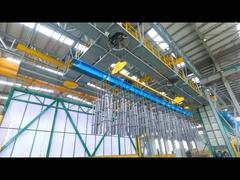
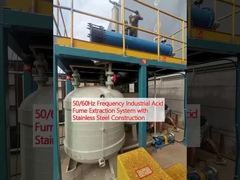
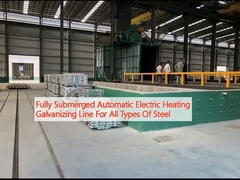
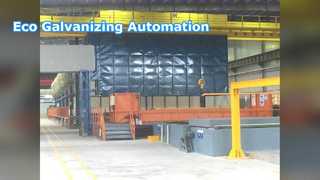
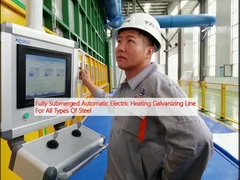
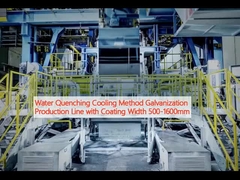
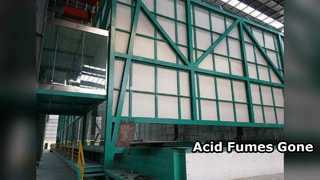
Brief: This video demonstrates the setup, operation, and key moments during typical use of a Ferrous Iron Removal Treatment System for hot dip galvanizing lines. You will see how this automated system removes Fe2+ and HCl from fluxing solutions, preventing zinc slag and ash formation, reducing zinc consumption to as low as 36kg/ton, and ensuring high-quality galvanized coatings on workpieces like angle steel.
Related Product Features:
Automated iron removal system maintains Fe+ ions within required limits for consistent galvanizing quality.
Reduces zinc consumption significantly, achieving levels as low as 36kg/ton for materials like 5-8mm angle steel.
Prevents formation of zinc slag, zinc ash, and zinc powder by filtering out Fe2+ and HCl from flux.
Features precise measurement and chemical addition to stabilize flux components like ZnCl2 and NH4Cl.
Handles fluxing solution regeneration at a maximum rate of 3 m³/h for continuous operation.
Improves zinc fluidity and workpiece surface quality through optimized flux composition.
Operates with a flux solution pH range of 3.0-4.5 to ensure effective iron ion removal.
Includes pressure filtration and transition tanks for efficient recycling and regeneration of flux.
FAQs:
Why is iron removal necessary in the hot dip galvanizing fluxing process?
Iron removal is essential because untreated flux allows Fe2+ and HCl to adhere to workpieces, leading to poor galvanizing quality, increased zinc consumption, and excessive production of zinc slag, ash, and powder.
How does the automated iron removal system work?
The system uses pumps and tanks to circulate flux solution, adding air and chemicals for precipitation, then filters the solution through a pressure filter to remove iron ions, enabling continuous flux recycling and regeneration.
What are the expected benefits of using this iron filtration system?
Benefits include reduced zinc consumption (e.g., down to 36kg/ton for angle steel), improved galvanizing coating thickness (86-99um), minimized zinc waste, and stabilized flux components for better product quality.
What is the maximum treatment capacity of the system?
The system can regenerate fluxing solution at a maximum rate of 3 cubic meters per hour, supporting high-volume production needs.